

Average conversion rate across all industries
A good rate, puts you in the top 25%
A 1% lift on a $10M site, added instantly
The quick-answer figures from this guide's opening section.
Conversion rate optimization is the process of increasing the percentage of website visitors who take a desired action — like making a purchase, filling out a form, or signing up for a newsletter.
Quick answer:
- What it is: Improving your website so more visitors become customers
- How it’s calculated: (Conversions ÷ Total Visitors) × 100
- Average conversion rate: 1.7% across all industries
- Good conversion rate: 5%+ puts you in the top 25%
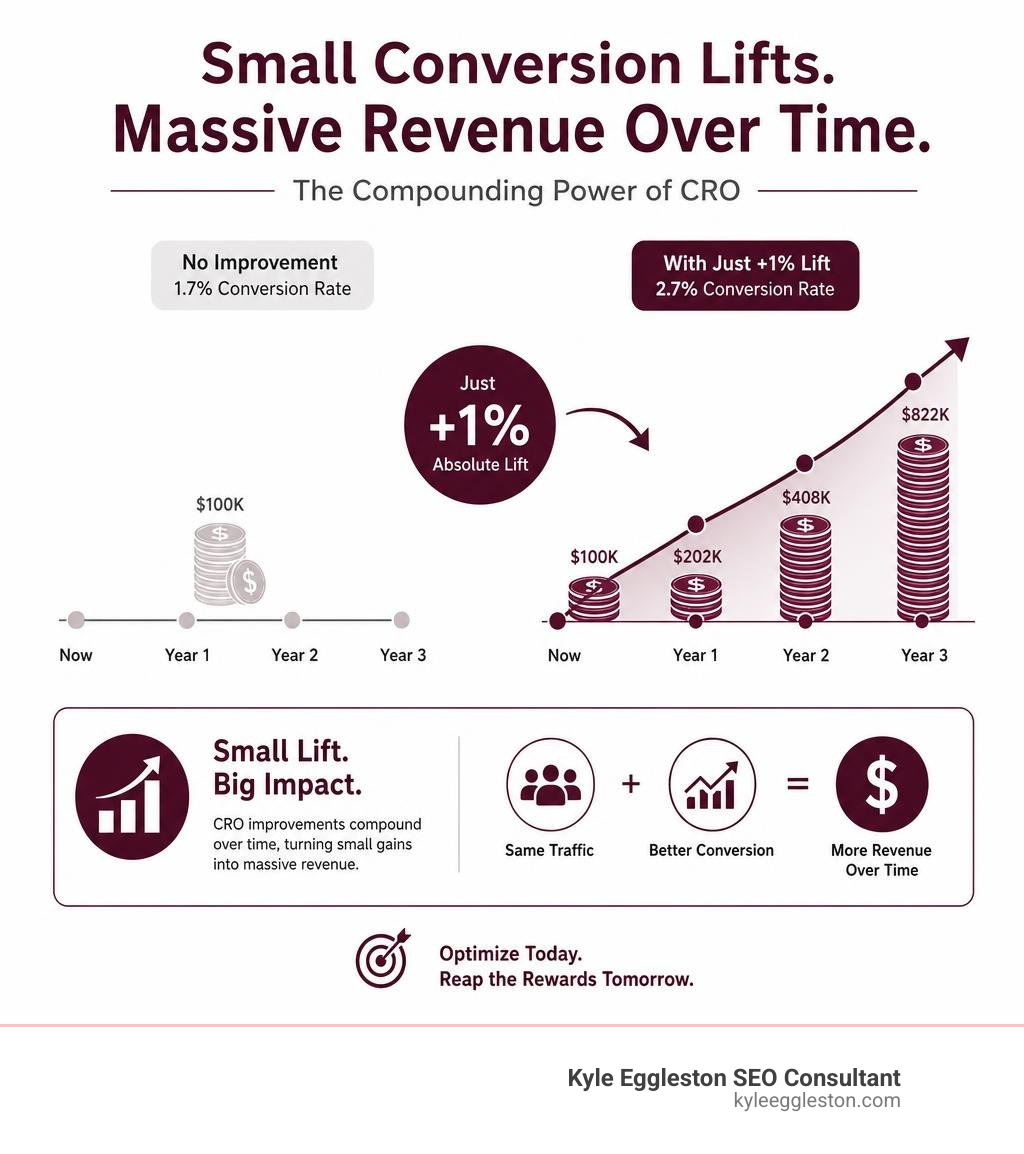
- Why it matters: A 1% lift on a $10M site adds $100,000 in revenue — instantly
Most businesses obsess over getting more traffic. But here’s the problem: if your site converts at 1%, doubling your traffic just gives you twice as many people who don’t buy.
The smarter move? Get more value from the visitors you already have.
Only 1.7% of website visitors convert on average. That means roughly 98 out of every 100 people who land on your site leave without taking action. That’s not a traffic problem — it’s a conversion problem.
And in 2026, with AI Overviews cutting into organic click-through rates, squeezing more revenue from existing traffic isn’t just smart. It’s survival.
I’m Kyle Eggleston, an SEO and AI technology consultant who helps businesses grow revenue through smarter digital strategy — including conversion rate optimization — and I’ve seen how small changes to a website can produce dramatic, compounding results. In this guide, I’ll walk you through everything you need to know to start optimizing your site like a pro.
At its core, conversion rate optimization (commonly abbreviated as CRO) is a systematic process of understanding what drives, stops, and persuades your users so you can give them the best possible user experience. It is not about guessing, relying on “best practices” that worked for someone else, or changing button colors because they look pretty. It is about using data and psychology to make your website work harder for your business.
To understand how CRO works, we first need to distinguish between two types of conversions:
- Macro conversions: These are the primary goals of your website. Examples include completing a purchase on an ecommerce store, submitting a lead generation form for a service business, or signing up for a paid subscription.
- Micro conversions: These are smaller, preparatory actions that indicate a user is moving down your sales funnel. Examples include adding an item to a shopping cart, downloading a free PDF guide, viewing a pricing page, or watching a product video.
Historically, CRO emerged in the early 2000s in the wake of the dot-com bubble. As digital marketing matured, businesses realized that buying web traffic was becoming increasingly expensive. Marketers began applying direct response marketing principles — which emphasize tracking, testing, and continuous improvement — to the digital space.
Over the years, the tools of the trade have evolved. For a long time, Google provided free testing tools like Google Website Optimizer (launched in 2007) and later Google Optimize. However, Google Optimize was discontinued in September 2023, forcing the industry to adapt and transition to more specialized, robust experimentation platforms.
Today, the CRO process relies heavily on the scientific method. We analyze user behavior, form a hypothesis, run a controlled experiment (like an A/B test), and analyze the results to see if the change is statistically significant.
Statistical significance is critical in CRO. It ensures that any lift in conversion rates is due to the changes we made rather than random chance. Without this mathematical rigor, we risk implementing changes that actually hurt our bottom line.
How to Calculate Your Website Conversion Rate
Calculating your conversion rate is straightforward. The basic conversion rate formula is:
Conversion Rate = (Total Conversions ÷ Total Visitors) × 100
For example, if your website receives 2,000 visitors in a month and 40 of those visitors fill out your contact form, your conversion rate is:
(40 ÷ 2,000) × 100 = 2%
To establish accurate baseline metrics, we must track these actions properly. In modern analytics platforms like Google Analytics 4 (GA4), we set up specific “events” for our micro and macro conversions. This allows us to segment conversion rates by traffic source, device type, and user demographics, giving us a clear picture of where our funnel is leaking.
What is a Good Conversion Rate in 2026?
A “good” conversion rate is highly subjective and depends heavily on your industry, business model, and price point. However, looking at broad benchmarks across the digital landscape in 2026, the average conversion rate across all sectors is 1.7%.
The median benchmark hovers around 2%, while top-quartile websites (the top 25%) convert at 5% or higher.
To give you a better idea of how this varies, look at these standard industry benchmarks:
- Service-based ecommerce / B2B lead gen: ~9%
- Skincare: 2.7%
- Food & beverage: 2.2%
- General apparel: 1.9%
- Active footwear: 1.9%
- Sporting goods: 1.3%
- Home furniture: 0.7%
- Luxury apparel: 0.4%
If you want to dive deeper into how these benchmarks apply to your specific niche, you can Learn more about conversion benchmarks.
Median benchmark ≈ 2% · Top-quartile sites convert at 5% or higher
Standard industry benchmarks cited in this guide.
If you are spending money on search engine optimization (SEO), local search, or paid ads to drive traffic to your site, neglecting CRO is like pouring water into a leaky bucket. By focusing on conversion efficiency, we can dramatically lower our Customer Acquisition Cost (CAC) and Cost Per Lead (CPL) without spending an extra dime on advertising.
When your conversion rate improves, your marketing efficiency skyrockets. You generate more leads and sales from the exact same volume of traffic. This introduces a level of revenue predictability that makes scaling your business much safer and easier.
Let’s look at the numbers. Consider a business generating $10 million in online revenue with a 2% conversion rate. If we optimize the user experience and increase that conversion rate by just 1% (bringing it to 3%), the site instantly generates an additional $100,000 in revenue. Over time, specialized CRO programs have generated over $2 billion in additional revenue for businesses worldwide by systematically plugging these leaks.
To illustrate the difference between simply buying more traffic and optimizing what you already have, consider this comparison:
| Metric | High-Traffic Acquisition Strategy | Conversion Rate Optimization Strategy |
|---|---|---|
| Monthly Visitors | 100,000 (Doubled from 50,000) | 50,000 (Unchanged) |
| Conversion Rate | 1% (Unoptimized) | 2% (Optimized via CRO) |
| Monthly Conversions | 1,000 | 1,000 |
| Ad Spend / Traffic Cost | $10,000 (Doubled) | $5,000 (Unchanged) |
| Cost Per Acquisition (CPA) | $10.00 | $5.00 (Cut in half!) |
| Long-Term Asset Value | Temporary (stops when budget stops) | Permanent website infrastructure |
How Different Teams Benefit from Conversion Rate Optimization
CRO is not just a project for the marketing department; it is a collaborative discipline that benefits almost every team within an organization:
- Marketing Teams: They enjoy lower acquisition costs, higher return on ad spend (ROAS), and more qualified leads to pass along to sales.
- Product Teams: They gain invaluable insights into how users interact with product features, allowing them to improve user onboarding and product adoption.
- UX/UI Designers: Instead of arguing over subjective design preferences, designers can use real behavioral data and A/B test results to validate their layouts and user flows.
- Engineering Teams: CRO helps developers prioritize their backlogs. By building and testing lightweight prototypes first, engineers avoid wasting hundreds of hours coding complex features that users don’t actually want.
- Data Analysts: CRO provides clean, structured behavioral data that helps analysts uncover deeper trends in user journeys and customer lifetime value.
To convert web visitors, we must align our website with user motivation and reduce friction. Users convert when the perceived value of taking action far outweighs the effort and risk required to do so.
Conversely, users abandon websites for very predictable reasons. The industry average cart abandonment rate is above 70%. According to behavioral research, the top conversion killers include unexpected costs during checkout (48%), required account creation (26%), and overly complex checkout processes (22%).
Furthermore, technical performance plays a massive role. Every additional second of page load time reduces conversions by an estimated 7%. If your site takes five seconds to load, you have already lost a massive chunk of your potential revenue before the user even sees your product.
Understanding how users visually digest your pages is also crucial. Most web users do not read every word; they scan. They typically follow an F-pattern visual hierarchy, scanning horizontally across the top of the page, then down the left side, and finally across a shorter horizontal area. If your primary value proposition and call to action (CTA) are not placed along this natural scanning path, they will be missed entirely.
Core Elements of a Successful Conversion Rate Optimization Strategy
To build a high-converting website, we must focus on several core pillars of optimization:
- Clear Value Proposition: Your headline must immediately explain what you offer, how it benefits the user, and why you are different from the competition. It must favor clarity over cleverness.
- Conversion Copywriting: We must use voice-of-customer language. This means mining customer reviews, surveys, and support tickets to use the exact words our customers use to describe their pain points and desires.
- Form Optimization: Keep forms as short as possible. While a single-page long form can feel intimidating, breaking forms into multi-step paths with progress bars can actually increase completion rates by up to 86%.
- Mobile-First Design: With mobile traffic accounting for more than 60% of web visits, your site must be perfectly optimized for thumbs. This includes using sticky CTAs at the bottom of the screen and ensuring touch targets are large enough.
- Page Speed & Performance: We must optimize our Core Web Vitals, aiming for a Largest Contentful Paint (LCP) of under 2.5 seconds.
- Social Proof and Trust Signals: Displaying specific, outcome-based reviews, security badges, and professional guarantees close to decision points helps ease purchase anxiety.
To learn more about prioritizing these elements in a structured hierarchy, you can Discover high-impact copy-driven CRO strategies.
The industry cart-abandonment rate is above 70%, here's why:
Unexpected costs at checkout
The single biggest reason shoppers abandon their carts.
Required account creation
Forcing sign-up before purchase pushes buyers away.
Overly complex checkout
Too many steps or fields kills completion.
Top checkout conversion killers from the behavioral research cited here.
To achieve consistent, compounding lifts, we must treat CRO as a repeatable, data-driven cycle rather than a series of random guesses. Here is the step-by-step framework we use:
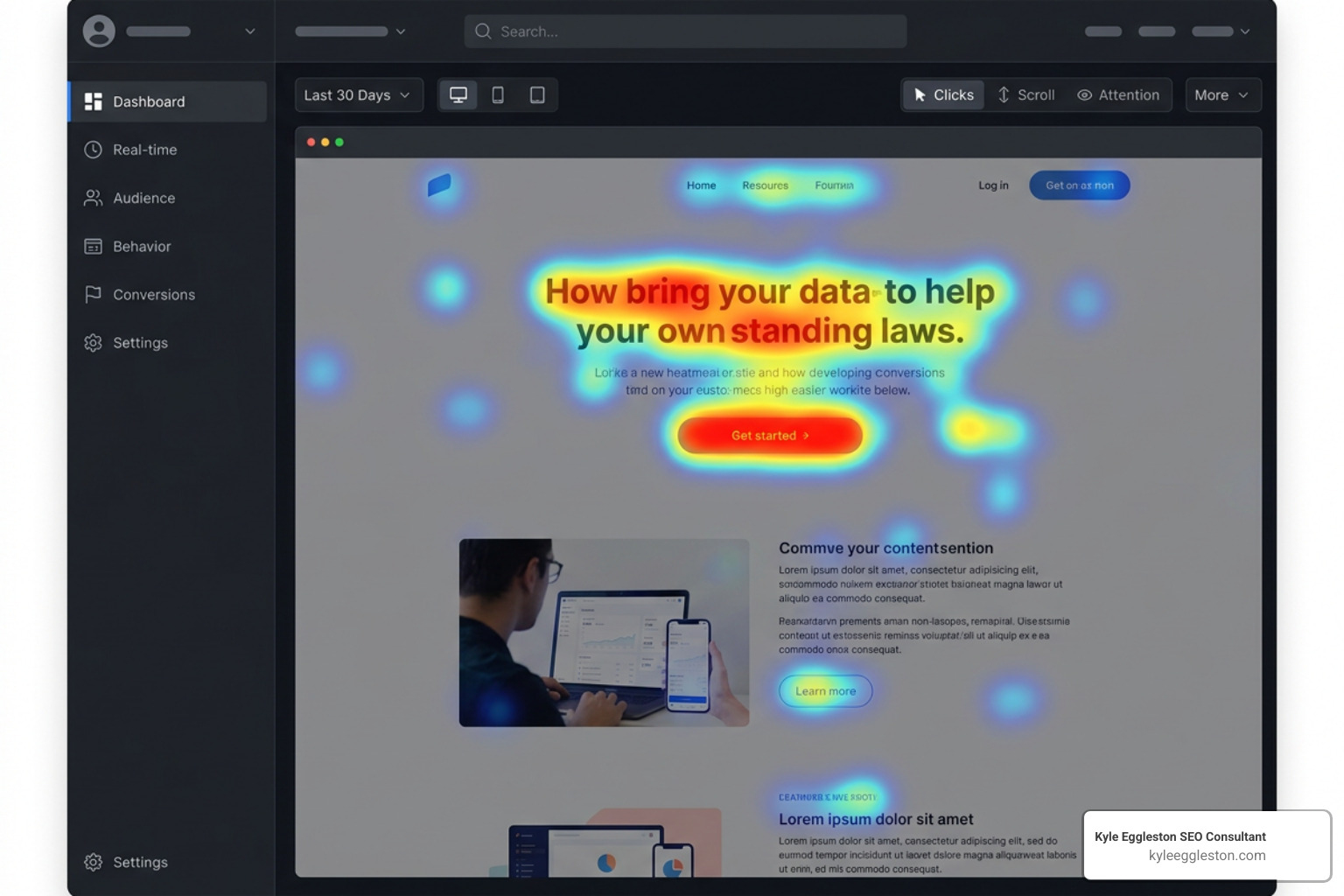
- Step 1: Analyze Data and Identify Bottlenecks. We start by looking at quantitative data in GA4 to see where users are dropping off in our sales funnel. We pair this with qualitative tools like heatmaps and session recordings to understand why they are leaving.
- Step 2: Generate Hypotheses. We write clear, testable hypotheses based on our findings. A good hypothesis follows this structure: “Because we noticed , we believe that changing will result in because .”
- Step 3: Prioritize Opportunities. We don’t test everything at once. We prioritize our hypotheses using the PIE Framework, scoring each idea from 1 to 10 on three criteria:
- Potential: How much improvement can be made on this page?
- Importance: How valuable is the traffic on this page?
- Ease: How difficult or costly is it to implement this test?
- Step 4: Choose a Testing Method. Depending on our traffic volume and the complexity of the change, we select the appropriate testing method (such as an A/B test or a redirect test).
- Step 5: Run the Test. We deploy the test and let it run until it reaches statistical significance.
- Step 6: Analyze Results and Implement Learnings. Whether a test wins or loses, it yields valuable insights. We implement winning variations permanently and use losing tests to refine our understanding of our audience.
Identifying CRO Opportunities in Your Funnel
To find the biggest opportunities for improvement, we must audit each stage of our conversion funnel:
- The Homepage: This is your digital storefront. It needs a clear value proposition above the fold and intuitive navigation that routes users to the correct subpages.
- Landing Pages: Keep these highly focused on a single call to action. Remove main navigation menus to prevent users from wandering off the conversion path.
- Pricing Pages: Simplify your pricing tiers. Use visual hierarchy to highlight your most popular option, and place a short FAQ section directly below the pricing table to handle common objections.
- Checkout Flow: Implement guest checkout as the default option. Use inline validation on form fields so users can correct errors in real-time rather than hitting “Submit” and getting frustrated by a wall of red error messages.
- Lead Capture Forms: Minimize required fields. If you need to qualify leads, use progressive profiling to collect information over multiple interactions rather than asking for a user’s life history on their first visit.
To validate our hypotheses, we use several distinct testing methodologies:
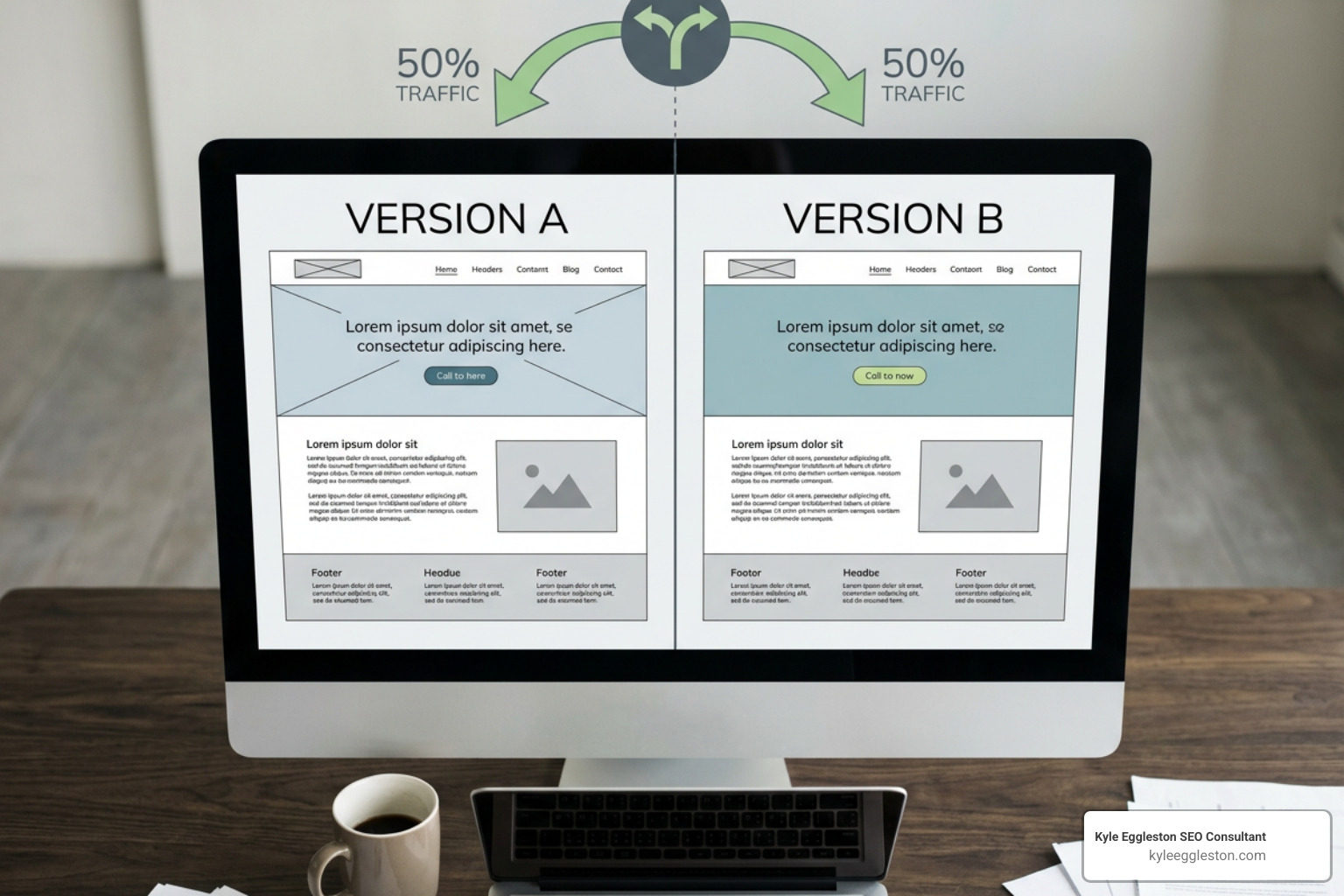
- A/B Testing: This is the most common method. We split our incoming traffic 50/50 between the original page (Control) and a modified version (Variant) to see which one performs better.
- Multivariate Testing (MVT): Instead of testing one complete page design against another, MVT allows us to test multiple variables simultaneously (e.g., testing three different headlines and two different CTA buttons at the same time) to see which combination yields the highest lift. This requires a massive amount of traffic to reach statistical validity.
- Split URL Testing: Also known as redirect testing, this method splits traffic between two completely different URLs. This is ideal for major page redesigns or backend platform migrations.
- Usability Testing: We watch real users interact with our website while thinking out loud. Watching just 20 minutes of real user sessions often reveals more friction points than staring at spreadsheets for 20 hours.
That only about 12% of experiments run actually produce a winning result. This is why we treat experimentation as a learning process. A “losing” test that disproves an assumption is still a massive win because it prevents us from permanently implementing a design change that would have hurt our revenue.
Essential Tools for Your Optimization Stack
Building a solid CRO tool stack doesn’t require a million-dollar budget. Here are the essential categories of tools we use to optimize websites:
- Analytics Tools: Google Analytics 4 (GA4) or Adobe Analytics for tracking macro and micro conversion funnels.
- Behavior Analytics Tools: Hotjar, Microsoft Clarity, or Crazy Egg for heatmaps, scroll maps, and user session recordings.
- A/B Testing Platforms: VWO, Optimizely, or Kameleoon for running split tests and personalizing user experiences.
- Survey & Feedback Tools: Usabilla or Qualarock for gathering exit-intent surveys and real-time user feedback.
For ecommerce brands, small tweaks directly impact daily transaction volume. With an average ecommerce conversion rate of 3.3%, online retailers must continuously optimize their shopping journeys to stay competitive.
Here are the most effective ecommerce CRO strategies we deploy:
- Create High-Converting Product Pages: Use high-resolution, zoomable product photography and video. Place detailed descriptions, sizing guides, and customer reviews prominently. Add dynamic social proof elements, such as “3 people are looking at this item right now,” to build gentle urgency.
- Simplify the Checkout Process: Allow guest checkout to eliminate checkout friction. Integrate express payment options like Apple Pay, Google Pay, or PayPal, which can boost mobile checkout completion rates by up to 35%.
- Prevent Cart Abandonment: Show all taxes, shipping fees, and delivery timelines upfront. Unexpected costs at checkout are the number one reason users abandon their carts.
- Optimize for Mobile Commerce: Ensure your site is fully responsive, with sticky “Add to Cart” buttons that remain accessible as the user scrolls.
If you are looking for specialized, data-backed optimization programs tailored for high-growth digital brands, you can Explore scientific conversion optimization services.
What is the difference between SEO and CRO?
SEO (Search Engine Optimization) focuses on getting people to your website by improving your visibility in organic search engine results. CRO (Conversion Rate Optimization) focuses on what those people do once they arrive on your site. SEO drives the traffic; CRO drives the transaction.
How much traffic do I need to run A/B tests effectively?
To run statistically reliable A/B tests, you generally need a minimum of 500 conversions per month and at least 5,000 unique weekly visitors. If your traffic is lower than this, running A/B tests will take too long to reach statistical significance. In these cases, you are better off focusing on qualitative user research, usability testing, and copy-first optimizations.
How long does it take to see results from CRO?
While some changes (like fixing a broken checkout button or correcting a major technical bug) can produce an immediate jump in sales, a structured CRO program typically takes 8 to 12 weeks to deliver statistically validated, compounding returns. CRO is an ongoing, iterative process, not a one-time project.
At the end of the day, driving traffic to an unoptimized website is a waste of your hard-earned marketing budget. By treating conversion rate optimization as a core pillar of your digital strategy, you can unlock massive, hidden revenue potential from the traffic you already have.
At Kyle Eggleston SEO Consultant, we combine over 20 years of experience in organic search, local SEO, and AI search optimization (AIO) with data-driven user experience design to help Chicago-area businesses scale predictably. We don’t believe in guessing games — we believe in measurable results.
Ready to make your website work smarter, not harder? Improve your website performance with SEO best practices and start converting more of your visitors into loyal customers today.